Worth knowing about Kotor
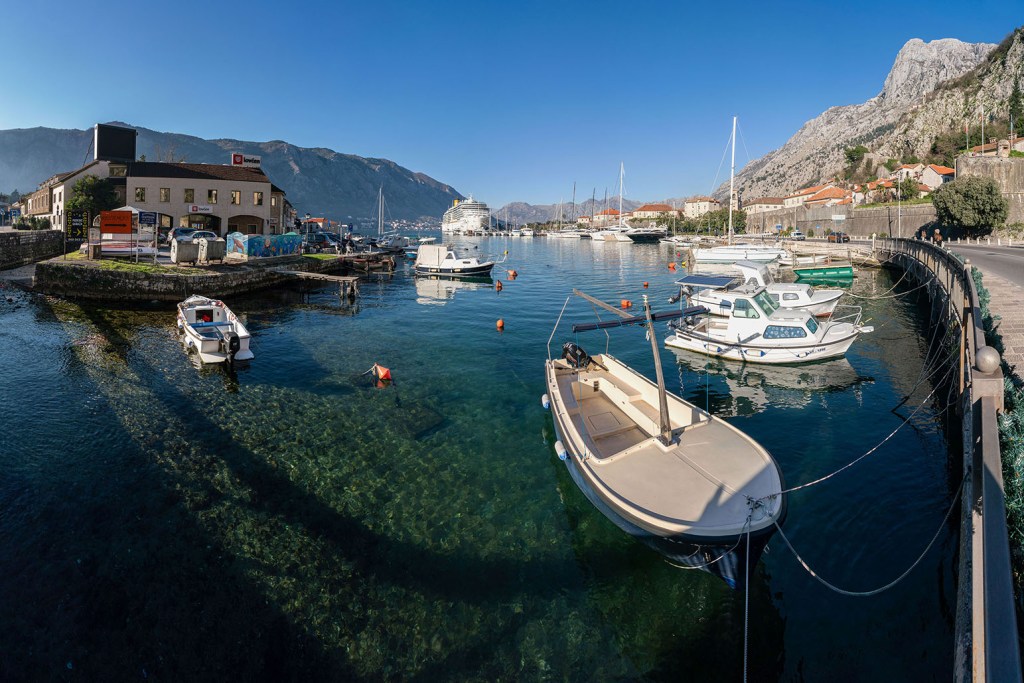
If you are already in Montenegro, be sure to visit the Old Town of Kotor, which is already more than 2 thousand years old and all this time it has remained one of the most important seaports and trading centers of the Adriatic.

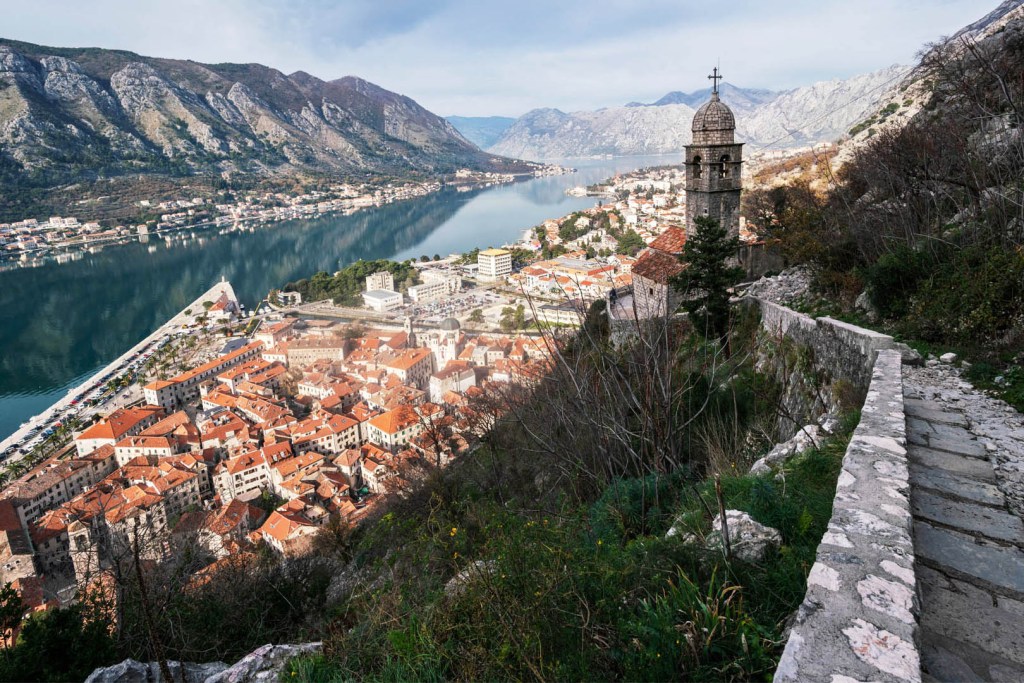
The old town of Kotor is located on the shores of the Bay of Kotor. Behind the fortress wall of the ancient city, palaces of wealthy families, churches, towers and fountains have been preserved. Here, every building, every street, every stone is fraught with a unique history of the city. In fact, the whole Old Town of Kotor is one big museum, where you just have time to turn your head and take pictures.
History of Kotor
The unique history of Kotor began many centuries ago. Research in the vicinity of the city amazed archaeologists: Rock paintings, various tools and pottery found in caves indicate that people lived in these places already in Neolithic times.
Since 168 BC, Rome and its successor Byzantium ruled this area. The first mention of the city dates back to this time. The Byzantine government in the city was interrupted several times: either by Bulgaria, or through by Serbia… But historians believe that Byzantium ruled Kotor until 1185, and then, until 1371, its Serbian period continued.
Kotor became part of Serbia as a vassal state, but retained its basic freedoms. During this period, the bishop’s residence was located here, and the Dominican and Franciscan monasteries were founded (13th century). Kotor was an important center of the Serbian state and experienced a significant cultural and economic upsurge during this period.
From 1371 to 1420, the period of independence of the city of Kotor lasted, during which it was, in essence, an independent urban patrician republic. Then came the Venetian period, which lasted until 1797: The city passed under the control of the Venetian Republic on its own initiative, fearing the Ottoman invasion.
The period before 1814 is called the period of the Napoleonic Wars, which passed under the sign of fear of French occupation and, nevertheless, French control. The Austrian period lasted until 1914, before the start of the First World War. The fiercest battles of this war left an indelible mark on the history of the city, and after the defeat of Austria-Hungary in the First World War, the city became part of the Kingdom of Serbs, Croats and Slovenes – since 1929 the Kingdom of Yugoslavia.
In 1941, Kotor was occupied by Nazi and Italian troops, and the lands around it were annexed. After the end of World War II, Kotor became part of the then communist Yugoslavia. Perhaps only the civil war that broke out in Yugoslavia in the 90s spared this city: There were no military operations in Kotor. Kotor is now part of the state of Montenegro.
10 Interesting Facts About Kotor
1. Since 2017, the fortification system of Kotor has been on the UNESCO World Heritage List.
To date, this is the only architectural landmark of the country that has been included in this list. In total, there are only 3 objects from Montenegro on the UNESCO list so far: the Bay of Kotor, the Durmitor National Park with the canyon of the Tara River and the Kotor Fortress.
2. The first pharmacy on the territory of modern Montenegro was opened in Kotor in 1326. The Kotor pharmacy is also considered one of the oldest in ex-Yugoslavia.
3. Until 1807, there were 50 religious sites in Kotor and its immediate environs – churches and monasteries. To this day, 13 temples have survived in the city.
4. Near the walls of Kotor, any construction was prohibited for a sufficiently long period of time – so that the enemy, in the event of an attack, could not use the buildings under the fortress walls.
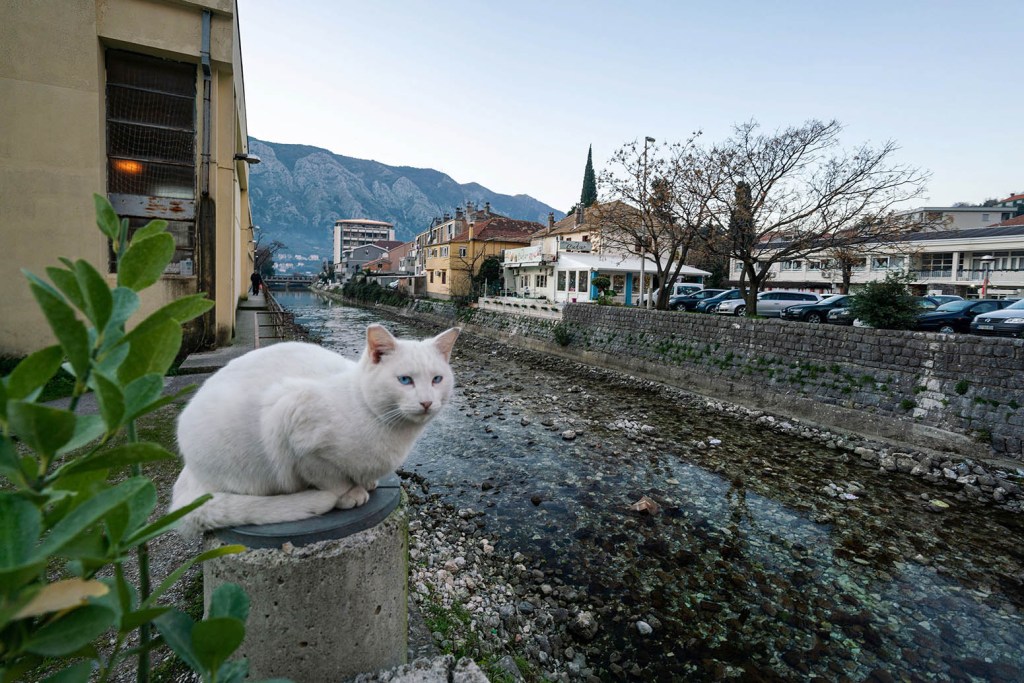
5. The name of the city has nothing to do with cats, contrary to the belief of many Russian-speaking tourists. Kotor was part of the Republic of Venice for a long time, so in Italian a cat is “gatto”, in Montenegrin a female cat is “mačka” (with an emphasis on the first syllable), a male cat is “mačak” (the accent is also on the first “a”). As you can see, it does not at all look like the Russian “kot” (“cat”) and there is no related sound with the name of the city either. However, there are really a lot of cats in the city and they act as its unofficial symbol.
6. In the Old Town of Kotor, the streets had no official names for a very long time.
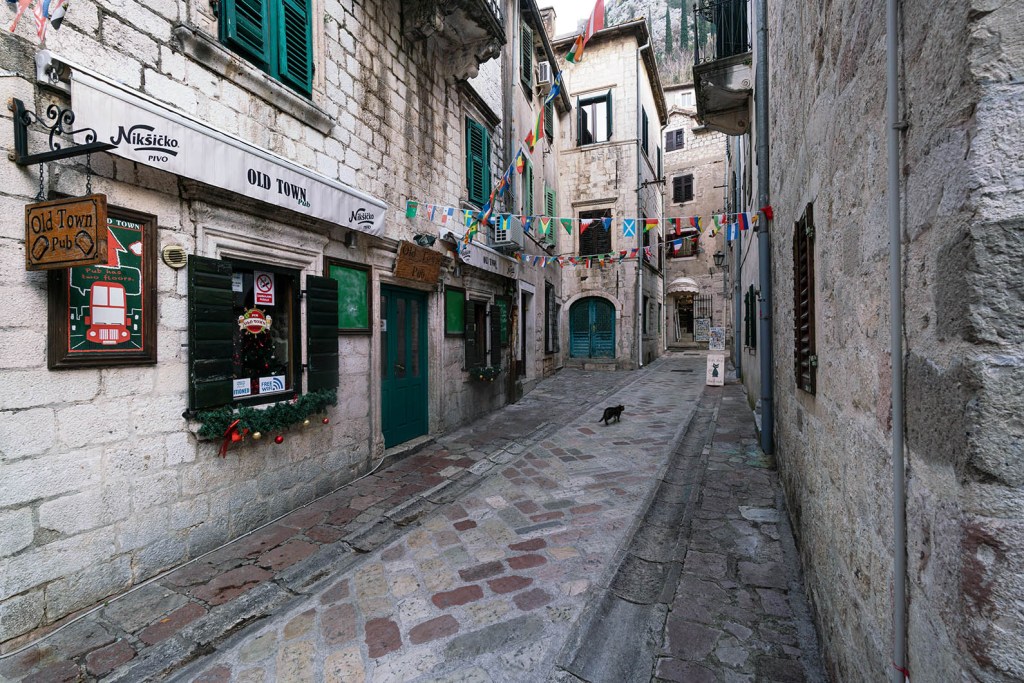
The main reason is that the city was constantly built and rebuilt, fires and earthquakes fell on it, so that the buildings inside the city – and, consequently, the directions and positions of the streets – changed regularly.
Nevertheless, the people themselves came up with names for city streets and alleys to make it easier to navigate. So, the most famous streets are: Zanatska (Craft), Mokra (Wet), Uska (Narrow), Pušti me proć (Let me pass).
Only in 2018 (!) it was decided to officially name some streets in order to make it easier for tourists to stay in Kotor.
7. The narrowest street in the historical quarter is not the one called Narrow, but “Let me pass” – in Montenegrin “Pušti me proć” or “Pušti me pasat”. Its width is only 80 cm. Previously, serious disputes often flared up on it because of people who did not want to let each other through.
8. The Kotor carnival tradition is at least 500 years old. Since 2009, Kotor has been a member of the Association of Carnival Cities of Europe. It annually hosts 3 carnivals: Winter, Summer and the parade of carnival boats – the famous Bokelskaya night.
9. The Gurdich River, located at the gates of the Old Town of the same name, is one of the natural oddities of Montenegro, it is called a river without a river bed. The length of Gurdich is 80 meters. The name of the river is supposedly derived from the Latin “gurges”, which can be translated as a source, whirlpool, whirlwind. It is curious that on dry hot days it is not at all under the gate, the pool is filled not with fresh, but with salt water – there is very little water in Gurdich, so the sea captures the territory and a small bay forms here. But when it rains, the river flow increases, Gurdich breaks out of the cave, displaces sea water and fills the space under the city gates. Actually, no difference is visible, so if you don’t know about this feature, you will never guess that today you saw the Adriatic under the gates, and the next day it was Gurdich.
10. And finally – a very little known fact: Only a third of the Old City is located on land. The rest is on wooden piles set in sea water.
Neither earthquakes, nor the sea, nor time did much damage to them. So far, the piles are in a very good condition, so there is no threat to the historical center in there.
You can see these wooden poles only by diving with diving equipment.